


What is Lion’s Mane mushroom?
Lion’s Mane, hericium erinaceus, is a distinctive white, shaggy-looking mushroom that grows naturally on hardwood trees across Europe, Asia, and North America. Its name comes from its long, cascading spines — resembling a lion’s mane.
For centuries, Lion’s Mane has been used in traditional wellness practices, particularly for supporting the nervous system and mental clarity - as well culinary treat. In recent decades, it has gained renewed attention as modern research began studying its effects on brain health and cognitive function.
Lion’s Mane is considered a functional mushroom, meaning it’s valued primarily for how it supports specific functions in the body rather than for nutrition alone. What sets Lion’s Mane apart is its unique profile of bioactive compounds — especially hericenones and erinacines — which are associated with supporting nerve growth and overall brain function.

What does Lion's Mane do in the body?
Lion’s Mane works by supporting the body’s natural systems rather than forcing short-term stimulation. Its benefits come from bioactive compounds that interact primarily with the nervous system, helping support how the brain functions, adapts, and recovers over time.
Rather than acting like caffeine or synthetic nootropics, Lion’s Mane is often described as a functional adaptogen — meaning it helps the body respond more effectively to mental demands, stress, and long-term cognitive load.
Research has shown that Lion’s Mane contains compounds associated with supporting nerve growth factor (NGF), a protein involved in the maintenance and regeneration of nerve cells. This is why Lion’s Mane is commonly linked to memory, focus, and overall cognitive resilience.
Importantly, its effects are typically gradual and cumulative, making it better suited for consistent, everyday use rather than quick fixes.
How Lion’s Mane is commonly used
Lion’s Mane is widely used to support everyday cognitive wellbeing. Rather than acting as a stimulant, it works in a supportive, balanced way — making it suitable for long-term use.
It is commonly used to support:
- Focus and mental clarity — helping maintain concentration during demanding tasks
- Memory and learning — supporting long-term cognitive performance
- Nervous system balance — promoting calm focus rather than overstimulation
- Brain resilience over time — especially during periods of mental stress

Why Lion’s Mane is different from other functional mushrooms
Visual and morphological characteristics
Lion’s Mane is immediately recognisable by its soft, cascading, white strands that resemble a mane or coral-like structure. Unlike many functional mushrooms that form hard shelves or caps, Lion’s Mane produces a delicate, fleshy fruiting body. This morphology is significant because the bioactive compounds of interest are concentrated in these soft tissues rather than in woody structures.
How Lion’s Mane grows in nature
In the wild, Lion’s Mane grows on hardwood trees, particularly beech and oak. It develops slowly on living or decaying wood, drawing nutrients directly from the tree substrate. This growth environment is closely linked to its natural association with nerve-supporting compounds, as wood-growing fungi often develop metabolites involved in protection, repair, and signalling rather than rapid energy output.
How it behaves when cultivated
Lion’s Mane adapts well to cultivation and reliably produces fruiting bodies under controlled conditions. Unlike some functional mushrooms that are primarily used as mycelium, cultivated Lion’s Mane fruiting bodies retain a compound profile comparable to those found in nature. This makes it one of the functional mushrooms where fruiting body extracts are especially valued.
Unique and valued bioactive compounds
What sets Lion’s Mane apart is its content of hericenones and erinacines — compounds that are rare or absent in most other functional mushrooms. These molecules have been studied for their relationship with nerve growth factors and neural signalling pathways. While beta-glucans are present, Lion’s Mane’s functional identity is defined less by immune modulation and more by its neuroactive profile.
How its support differs from other mushrooms
Most functional mushrooms are traditionally associated with immune balance, stress adaptation, or metabolic regulation. Lion’s Mane’s primary role is different: it is most closely linked to cognitive function, learning, memory, and long-term brain health. Rather than stimulating or calming, it supports the brain’s own maintenance and adaptive processes over time.
How Lion’s Mane works alongside other mushrooms
Lion’s Mane is often combined with other functional mushrooms to create a broader support system. While Lion’s Mane focuses on cognitive and nervous system support, mushrooms like Reishi contribute calm and stress balance, and Maitake supports metabolic and immune regulation. Together, they form complementary roles rather than overlapping functions — supporting both mental and systemic wellbeing as part of a balanced routine.
Who is Lion’s Mane for — and when does it make sense?
Lion’s Mane is best suited for people looking to support their cognitive wellbeing in a steady, sustainable way — not for a quick boost or short-term stimulation.
It may be a good choice if you:
- Spend long hours doing mentally demanding work and want to support focus and clarity
- Are studying or learning and want to support memory and mental performance
- Feel mental fatigue or brain fog, especially during busy or stressful periods
- Want to support long-term brain health as part of a proactive wellness routine
- Prefer natural, non-stimulating support rather than caffeine or nootropics that cause crashes
Lion’s Mane is often used as part of a daily wellness routine, where consistency matters more than immediate effects.
When Lion’s Mane may not be the right fit
Lion’s Mane is not designed for instant results. It may not be the best choice if you are:
- Looking for an immediate energy or stimulant effect
- Expecting noticeable changes after just a few doses
- Seeking a supplement for acute stress or sleep support (other mushrooms may be more suitable)
Because Lion’s Mane works gradually, it’s most effective when taken consistently over time.
A balanced approach works best
Lion’s Mane works well on its own, but many people choose to combine it with other functional mushrooms depending on their goals — such as pairing it with Maitake for gut-brain synergy or Reishi for balance and stress support.
Explore Lion’s Mane extract on its own, or as part of a thoughtfully bundles.

Our approach to Lion’s Mane mushroom
Lion’s Mane is best understood when its source and processing are clearly defined. At PRIMECAPS, our approach focuses on purity, consistency, and respect for how this mushroom naturally develops its functional compounds.
We use 100% fruiting body Lion’s Mane, as this is where the compounds most closely associated with cognitive and nervous system support are found. Fruiting bodies develop a different and more complete compound profile compared to mycelium grown on grain-based substrates.
Our Lion’s Mane extracts are produced using carefully controlled extraction methods designed to preserve naturally occurring beta-glucans and other bioactive compounds, without unnecessary processing or dilution.
We do not use fillers, binders, or grain-based substrates. Each batch is routinely tested to ensure purity, safety, and consistency, allowing Lion’s Mane to be used as part of an everyday wellness routine rather than a short-term solution.
Learn more and:
View Our Quality Standards
Explore Lion’s Mane Extract
Key Lion’s Mane benefits for brain and mental performance

BETTER FOCUS
Used to promote concentration and mental endurance during mentally demanding tasks.

HELPS MEMORY
Supports learning and memory by helping the brain adapt and perform under stress.

NEUROPROTECTION
Backed by studies exploring its ability to regenerate and protect neural pathways.

ANTIOXIDANT
Rich in compounds that help protect cells from oxidative stress — nature’s internal defense.

LESS BRAIN FOG
Often associated with enhanced mental sharpness and reduced brain fog.
Related Mushroom Articles

Guide to Functional Mushrooms: Benefits, Types and How They Support Health
Why Functional Mushrooms Are Becoming More Popular? Functional mushrooms have been used for centuries in traditional wellness systems across Asia and Europe. Today they are becoming increasingly popular as natural supplements that support different aspects of health, from cognitive function to immune balance and physical performance. Unlike culinary mushrooms that are mainly used for nutrition, functional mushrooms are valued for their bioactive compounds and their ability to support the body’s natural systems. This guide explores the most popular functional mushrooms and how they may support overall wellbeing. What Are Functional Mushrooms? Functional mushrooms are species that contain natural compounds associated with supporting different physiological functions in the body. These mushrooms are often rich in: beta-glucans polysaccharides antioxidants adaptogenic compounds Because of their unique composition, functional mushrooms are commonly used to support areas such as: cognitive health immune system balance energy and endurance metabolic health stress management Most modern supplements use concentrated mushroom extracts, allowing people to include these mushrooms easily in their daily routines. The Most Popular Functional Mushrooms Below are some of the most well-known functional mushrooms and their traditional roles. Lion’s Mane – The Brain Support Mushroom Lion’s Mane (Hericium erinaceus) is one of the most recognised functional mushrooms associated with cognitive health. This mushroom contains compounds called hericenones and erinacines, which are studied for their relationship with nerve growth factor (NGF), a protein involved in maintaining healthy neurons. Lion’s Mane is commonly associated with: focus and mental clarity memory support cognitive performance brain health You can learn more in our guide to Lion’s Mane mushroom benefits. Reishi – The Mushroom of Calm Reishi (Ganoderma lucidum) has a long history in traditional wellness practices and is often associated with relaxation and balance. Reishi contains triterpenes and beta-glucans that are studied for their role in immune system activity and stress response. Reishi is commonly linked to: stress balance relaxation sleep support immune health Learn more about Reishi mushroom benefits and how it supports calm and balance. Cordyceps – The Performance Mushroom Cordyceps mushrooms are widely associated with energy and endurance. They contain compounds such as cordycepin, which are studied for their relationship with cellular energy production and oxygen utilisation. Cordyceps supplements are commonly used by: athletes active individuals people seeking natural energy support Modern supplements typically use Cordyceps militaris, which provides consistent levels of key bioactive compounds. Read more about Cordyceps mushroom benefits and the difference between Cordyceps sinensis and militaris. Maitake – The Vitality Mushroom Maitake (Grifola frondosa) is a functional mushroom traditionally associated with vitality and metabolic health. Maitake naturally contains beta-glucans and antioxidants that are studied for their role in immune and metabolic balance. Maitake is commonly linked to: metabolic support immune health overall vitality Explore the full article on Maitake mushroom benefits. Chaga – The Antioxidant Mushroom Chaga (Inonotus obliquus) grows primarily on birch trees in northern forests and is known for its extremely high antioxidant content. This mushroom has traditionally been consumed as a tea or tonic. Chaga is commonly associated with: antioxidant support immune system balance cellular protection Learn more in our guide to Chaga mushroom benefits. Turkey Tail – The Immunity Mushroom Turkey Tail (Trametes versicolor) is one of the most researched functional mushrooms. It contains natural compounds known as polysaccharopeptides, which are studied for their relationship with immune system activity. Turkey Tail is commonly linked to: immune system support gut microbiome balance overall resilience Discover more about Turkey Tail mushroom benefits. How Functional Mushrooms Work Functional mushrooms contain compounds that support the body's natural processes rather than acting like stimulants. Many mushrooms contain beta-glucans, which are studied for their interaction with immune cells. Others contain compounds that may support: nerve health metabolic balance energy production antioxidant protection Because these effects are associated with long-term physiological processes, functional mushrooms are typically used consistently over time. How to Choose High-Quality Mushroom Supplements Not all mushroom supplements are the same. The quality of a product can vary depending on how the mushrooms are grown, processed and extracted. High-quality mushroom supplements typically: use the fruiting body of the mushroom rather than mycelium grown on grain contain measurable levels of beta-glucans, one of the key beneficial compounds avoid unnecessary fillers or additives use carefully controlled extraction methods to preserve active compounds Choosing well-sourced extracts helps ensure consistency, purity and reliable quality. For those interested in understanding how PRIMECAPS manufacturers approach mushroom quality standards explore an example explanation of quality principles. How to Add Functional Mushrooms to Your Routine Functional mushrooms can be taken in several forms, including: capsules powders extracts teas Many people incorporate functional mushrooms into their daily wellness routines depending on their goals. For example: Morning support: Lion’s Mane or CordycepsEvening balance: ReishiDaily immune support: Turkey Tail, Chaga or Maitake When choosing a dosage, it is important to understand what the product actually contains. The concentration of active compounds can vary significantly between different supplements. For example: A mushroom extract with around 40% beta-glucans is considered a high-potency extract. In such cases, the recommended starting dose may be around one capsule (approximately 400 mg) per day. If a product contains around 20% beta-glucans, a higher amount may be needed to reach a similar intake of active compounds. Products labelled with 20% polysaccharides do not necessarily indicate beta-glucan content. In some cases, the actual level of beta-glucans may be much lower, making the effective dosage more difficult to determine. Capsule extracts are often preferred because the compounds are already concentrated and easier to measure. This usually means a smaller amount is needed compared with loose mushroom powders mixed into food or drinks. Consistency is generally recommended when using functional mushrooms, as their benefits are often associated with gradual and long-term use. Some mushrooms may also be used in cycles or with occasional breaks. For example, mushrooms such as Cordyceps, Chaga or Turkey Tail are sometimes taken periodically, depending on individual routines and product recommendations. Always pay attention to the dosage guidance provided with the product. Final Thoughts Functional mushrooms have gained global attention as natural supplements that support different aspects of health. From cognitive support and stress balance to immune health and vitality, these mushrooms offer a diverse range of potential benefits. By understanding how different mushrooms work and choosing high-quality extracts, it is possible to build a wellness routine that supports both mental and physical wellbeing.
Learn more
Lion’s Mane Mushroom: Benefits, Brain Health and Cognitive Support
What is Lion’s Mane mushroom? Lion’s Mane (Hericium erinaceus) is a distinctive white mushroom known for its long, cascading spines that resemble a lion’s mane. It grows naturally on hardwood trees across Europe, Asia, and North America and has been used for centuries in traditional wellness practices. In recent years, Lion’s Mane has gained global attention as a functional mushroom associated with brain health, focus, and cognitive performance. Unlike mushrooms used mainly for nutrition, functional mushrooms are valued for how they support specific processes in the body. Today, Lion’s Mane is commonly used as a daily supplement to support mental clarity, memory, and long-term brain resilience. If you're interested in trying it yourself, you can explore PRIMECAPS Lion’s Mane mushroom extract capsules. Why Lion’s Mane is considered the “smart mushroom” What makes Lion’s Mane unique is its profile of bioactive compounds, especially hericenones and erinacines. These compounds are studied for their relationship with nerve growth factor (NGF) — a protein that helps maintain and regenerate nerve cells in the brain. Because of this connection, Lion’s Mane is often associated with: cognitive performance mental clarity memory support long-term brain health Rather than acting like caffeine or synthetic nootropics, Lion’s Mane works gradually by supporting the brain’s natural systems. To learn more about how Lion’s Mane works and its traditional use, read our detailed Lion’s Mane mushroom guide. Key Lion’s Mane mushroom benefits 1. Supports focus and mental clarity Lion’s Mane is commonly used by people who spend long hours doing mentally demanding work. It may help support concentration and mental endurance during tasks that require sustained focus. Students, professionals, and creative workers often include Lion’s Mane as part of their daily routine. 2. Helps support memory and learning Compounds found in Lion’s Mane are studied for their role in supporting neural signalling and cognitive function. This is why the mushroom is frequently associated with memory and learning support. Regular use is often recommended for people who want to support long-term cognitive wellbeing. 3. Supports long-term brain health Lion’s Mane is particularly valued for its potential role in supporting nerve growth and neural maintenance. By supporting the brain’s natural regenerative processes, it may contribute to long-term cognitive resilience. Because these processes take time, Lion’s Mane is typically used consistently over weeks or months rather than for immediate effects. 4. Helps reduce mental fatigue and brain fog Many people report improved mental clarity when using Lion’s Mane as part of a daily wellness routine. Rather than creating stimulation or energy spikes, it supports steady cognitive performance. This makes it a popular alternative for those who prefer natural focus support without caffeine. Who is Lion’s Mane best suited for? Lion’s Mane is commonly used by people who want to support mental performance and cognitive wellbeing. It may be particularly suitable for: students and learners professionals working in mentally demanding fields entrepreneurs and creatives people experiencing occasional brain fog individuals interested in long-term brain health Lion’s Mane works best when taken consistently as part of a balanced lifestyle. Lion’s Mane in modern supplements High-quality Lion’s Mane supplements are typically made from the fruiting body of the mushroom, which contains the compounds most closely associated with cognitive support. For example, PRIMECAPS Lion’s Mane Organic Mushroom Extract – 120 capsules uses: 100% fruiting body extract 38% beta-glucans naturally occurring erinacines and hericenones vegan capsules without fillers or additives This approach helps preserve the mushroom’s natural compound profile while ensuring purity and consistency. How to take Lion’s Mane Lion’s Mane supplements are usually taken daily as capsules or extracts. Typical recommendations include: taking it in the morning or early afternoon using it consistently for several weeks combining it with healthy nutrition and sleep habits Because Lion’s Mane works gradually, results vary depending on dosage, consistency, and individual physiology. Lion’s Mane and other functional mushrooms Lion’s Mane is often combined with other functional mushrooms to create broader wellness support. If you want to learn more about different functional mushrooms and their benefits, explore our complete guide to medicinal mushrooms. For example: Reishi – associated with stress balance Maitake – linked to metabolic support Cordyceps – connected to energy and endurance Together these mushrooms can support both mental and physical wellbeing as part of a balanced daily routine. Final thoughts Lion’s Mane mushroom has become one of the most recognised functional mushrooms for supporting cognitive health. With its unique bioactive compounds and long history of traditional use, it offers a natural way to support focus, memory, and mental resilience. While it is not designed to deliver instant stimulation, Lion’s Mane may play an important role in a long-term brain health routine when used consistently.
Learn moreFAQs
What is Lion’s Mane and what is it used for?
What is Lion’s Mane and what is it used for?
Lion’s Mane (Hericium erinaceus) is a functional mushroom traditionally used to support memory, focus, and overall brain health. Studies suggest it may stimulate nerve growth factor (NGF), which supports neuron health.
Where does Lion’s Mane come from?
Where does Lion’s Mane come from?
Lion’s Mane grows naturally on hardwood trees in Asia, Europe, and North America. Its earliest recorded uses go back centuries in Japan, where monks valued it for supporting focus during meditation. In traditional Chinese medicine, it has been used to promote digestion, vitality, and overall resilience.
Who is Lion’s Mane for?
Who is Lion’s Mane for?
Students, professionals, and older adults all use Lion’s Mane — whether for focus, memory, or long-term brain resilience.
How long should I take Lion’s Mane for effects? How should I take Lion’s Mane?
How long should I take Lion’s Mane for effects? How should I take Lion’s Mane?
Effects vary — some people notice sharper focus within days, while for others it may take several weeks. Results depend on consistency, dosage, and individual factors.
For optimal benefits, take PRIMECAPS Lion’s Mane daily, preferably in the morning or early afternoon, with a glass of water and ideally with a meal that contains some healthy fat to support absorption.
Depending on your needs, 2–4 capsules per day is recommended. Use a smaller dose for daily support, and a larger dose when you need extra mental clarity and performance. Consistency is key, so consider making it part of your daily wellness routine.
Can I combine Lion’s Mane with other mushrooms?
Can I combine Lion’s Mane with other mushrooms?
Lion’s Mane pairs well with other functional mushrooms and adaptogens such as Cordyceps (for energy and stamina), Reishi (for stress balance and relaxation), or Maitake (for immune and metabolic support). These combinations help enhance mental clarity, cognitive function, and overall resilience — tailored to your specific wellness goals.
See our full range of synergistic combinations under the Bundles section.
Learn which option suits you best
🥇 Lion's Mane – Promotes clarity, focus, and memory → Best for long-term mental sharpness and brain maintenance.
🥈 Brain & Body Kit (Lion’s Mane + Cordyceps) – Enhances cognitive speed and stamina → Ideal for high-focus days, learning, or creative work.
🥉 Mood & Balance Kit (Lion’s Mane + Reishi) – Combines clarity with emotional balance → Great for nervous system recovery and mood resilience.
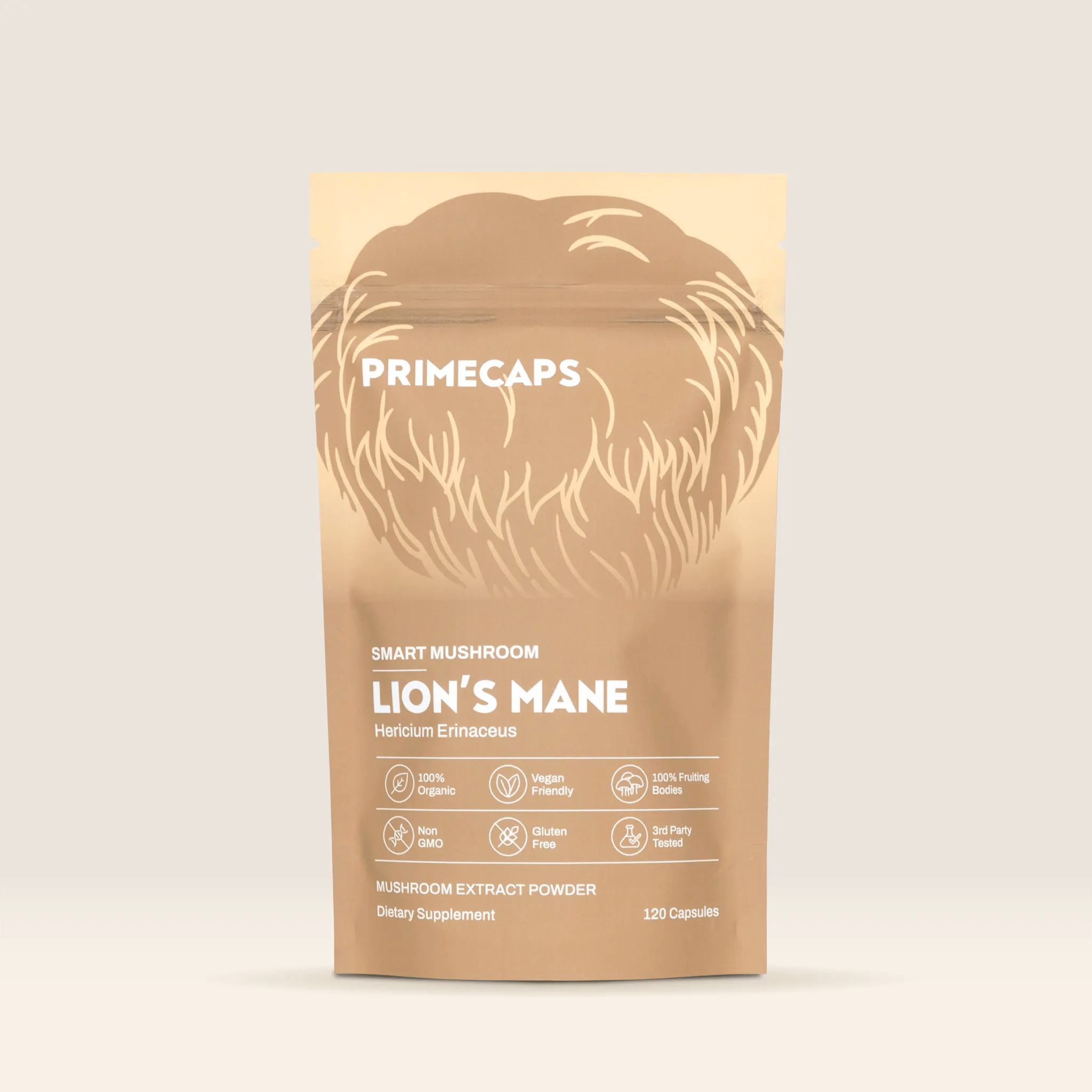

Lion’s Mane Organic Mushroom Extract – 120 capsules


Lion’s Mane & Cordyceps – Brain and Energy kit – 240 capsules


